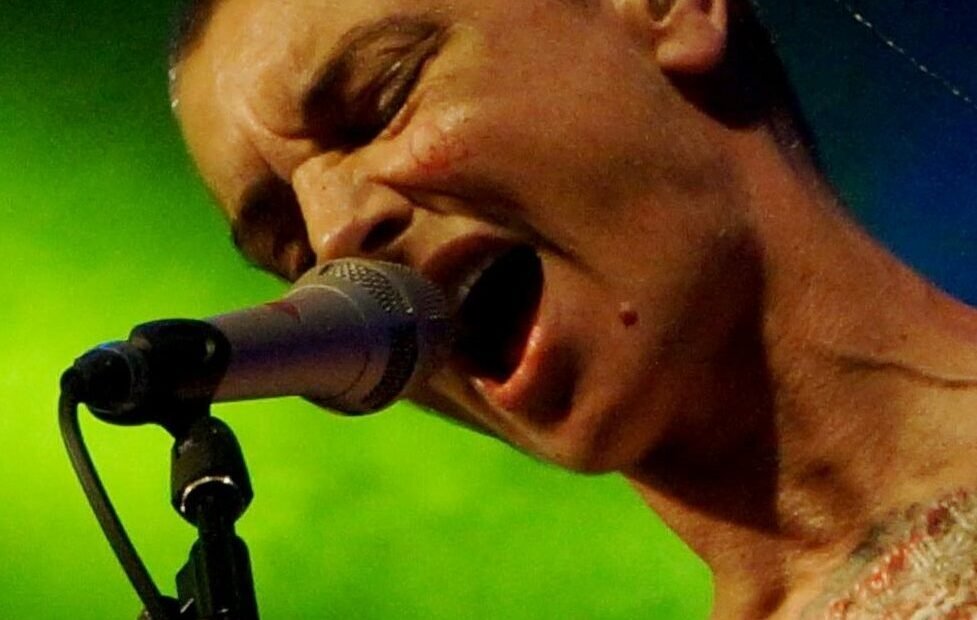
She had one of the most recognizable voices of her generation and one of the most confrontational public lives in popular music. Sinéad O’Connor, who also took the name Shuhada’ Sadaqat, died on July 26, 2023, at the age of 56, leaving behind ten studio albums, four children, and a legacy that still shapes arguments about fame, protest, and faith. This profile is written entirely in the past tense, because she is deceased, and it answers the questions readers continue to ask: her age at death, her height, her marriages and children, her parents and family, her songs and albums, her Irish nationality, her religion, and what her estate was worth.
Her career cannot be separated from her convictions. She tore up a photograph of the Pope on live television, she was ordained a priest, she converted to Islam, and she spoke about mental illness and abuse at a time when few public figures did. The facts below are drawn from Wikipedia and named published sources, with disagreements and gaps stated openly.
Early Life & Biography: Where Was Sinéad O’Connor Born?
Sinéad Marie Bernadette O’Connor was born on December 8, 1966, in Dublin, Ireland. Her birthday was December 8. She died in London, England, on July 26, 2023, aged 56. Her nationality was Irish. Some keyword databases list her under the United Kingdom, likely because she died in London and spent periods of her life there, but she was born in Dublin, identified as Irish throughout her life, and Irish is the correct answer.
Her parents were John Oliver “Seán” O’Connor, a structural engineer who later became a barrister, and Johanna Marie O’Grady. She was the third of five children. Her brother Joseph O’Connor became a well-known novelist. Her childhood, by her own account in interviews and in her 2021 memoir Rememberings, was deeply difficult, and she described abuse by her mother. Her parents separated when she was young. Her mother died in a car accident on February 10, 1985, when O’Connor was eighteen. That loss, and the relationship that preceded it, recurred in her songwriting for the rest of her career.
As a teenager she was placed in a Magdalene institution after shoplifting, an experience she later wrote about, and her musical talent was recognized while she was there. She sang in the band Ton Ton Macoute before signing a solo record deal. Her shaved head, adopted in the 1980s, became one of the most famous images in pop music, a deliberate rejection of industry expectations about how a female singer should look.
Published listings conflict on her height. Most listings give 5 feet 4 inches, while others give 5 feet 5 inches. No confirmed figure resolves the disagreement, so this profile states the conflict rather than choosing a number. On weight, there is no reliable published figure, and none is invented here. For a singer whose appearance was discussed far beyond what the facts supported, stating those two gaps plainly is the accurate approach.
Her relationship with memory and the past was central to her art. She returned repeatedly to childhood, to her mother, and to Ireland in her songs, and her memoir was praised for its candor. Readers interested in the science behind how such experiences are held over a lifetime can explore an explanation of how the brain stores long-term memories, a separate topic from her biography but a useful companion to understanding why early experiences shaped her work so persistently.
Career Highlights: What Were Sinéad O’Connor’s Biggest Songs and Albums?
O’Connor released her debut album, The Lion and the Cobra, in 1987. It included “Mandinka” and “Troy” and established her as a distinctive voice: intense, technically extraordinary, and unwilling to soften her material. The album earned critical acclaim and a Grammy nomination, but it was her second record that made her a global figure.
I Do Not Want What I Haven’t Got, released in 1990, sold more than seven million copies. It contained her recording of “Nothing Compares 2 U,” a song written by Prince. Her version reached number one around the world, was named the number-one world single at the Billboard Music Awards, and its video, built around a close-up of her face as she sang and wept, became one of the defining music videos of the era. The album also included “The Emperor’s New Clothes.” She won the Grammy Award for Best Alternative Music Performance for the album, though she boycotted the ceremony in protest at the commercialization of the awards.
Her full studio album catalog was: The Lion and the Cobra (1987), I Do Not Want What I Haven’t Got (1990), Am I Not Your Girl? (1992), Universal Mother (1994), Faith and Courage (2000), Sean-Nós Nua (2002), Throw Down Your Arms (2005), Theology (2007), How About I Be Me (and You Be You)? (2012), and I’m Not Bossy, I’m the Boss (2014). Other notable songs across that catalog included “No Man’s Woman,” “Fire on Babylon,” “Thank You for Hearing Me,” and, late in her career, “Take Me to Church.”
On October 3, 1992, during a performance on Saturday Night Live, she tore a photograph of Pope John Paul II in half and said, “Fight the real enemy,” protesting child abuse within the Catholic Church. The backlash was severe, especially in the United States, and her commercial career never fully recovered there. Decades later, as abuse scandals were documented in detail, many commentators reassessed the protest as prescient. At the time, she defended it as an act of faith and conscience, not publicity.
Her later career included traditional Irish music on Sean-Nós Nua, reggae covers on Throw Down Your Arms, and theological material on Theology, reflecting interests that ran alongside the religious journey covered below. She continued to record and perform, published her memoir in 2021, and was working on new material in her final years. She died in July 2023, eighteen months after the death of her son Shane, a loss she spoke about publicly and which those close to her described as devastating.
Personal Life & Family: Who Was Sinéad O’Connor’s Partner, and Who Were Her Children?
O’Connor was married four times. Her first marriage was to music producer John Reynolds, from 1989 to 1991. She later married journalist Nick Sommerlad; her biographical infobox dates that marriage from 2001 to 2003, while the text of her biography describes it as ending in July 2002 after eleven months, a minor disagreement between sources that is noted here rather than resolved artificially. She married musician Steve Cooney in 2010; that marriage ended in 2011. In December 2011 she married Barry Herridge; they lived together for only seven days initially, and she later said in 2014 that they had not divorced but had decided against renewing their vows. The public record of that final marriage’s legal status was ambiguous.
What can be stated plainly is this: at the time of her death, O’Connor had no publicly confirmed partner. No reliable source names a partner in her final years, and this profile does not invent one. Searches for “Sinéad O’Connor partner” are best answered with that honest statement and with the history of her four marriages above.
She had four children. Her eldest son, Jake Reynolds, was born on June 16, 1987; his father was John Reynolds. Her daughter, Brigidine Roisin Waters, was born on March 6, 1996; her father was journalist John Waters. Her son Shane Lunny was born on March 10, 2004; his father was musician Dónal Lunny. Shane died by suicide on January 7, 2022, at the age of seventeen, a tragedy O’Connor discussed openly while campaigning about mental health care. Her youngest son, Yeshua Francis Neil Bonadio, was born on December 19, 2006; his father was Frank Bonadio. She became a grandmother in July 2015, when Jake’s son was born.
Her family of origin also remained part of her story. She was the third of five children of Seán O’Connor and Johanna Marie O’Grady, and her brother Joseph O’Connor’s literary career made the family notable in Ireland beyond music. She changed her legal name to Magda Davitt in 2017, explaining that she wanted a name free of patriarchal associations, before her religious conversion the following year.
What Was Sinéad O’Connor’s Religion, and What Was She Worth? Net Worth & Lifestyle
Religion was not a side topic in O’Connor’s life; it was one of its central threads. She was raised Roman Catholic in Ireland. In 1999 she was ordained a priest. Sources name the ordaining body differently: Wikipedia and the task sources for this profile refer to the Latin Tridentine Church, while other accounts name the Irish Orthodox Catholic and Apostolic Church and Bishop Michael Cox. Both were independent Catholic groups not recognized by Rome. The disagreement is noted here because it is real, and because her ordination was itself a statement: she considered herself a Catholic priest while rejecting the authority of the Vatican.
In October 2018 she converted to Islam and took the name Shuhada’ Sadaqat. She continued to perform and record under the name Sinéad O’Connor. She spoke about studying scripture across faiths and described her conversion as the conclusion of a long theological journey. Any accurate answer to “Sinéad O’Connor religion” has to hold all three facts together: a Catholic upbringing, an ordination in an independent Catholic church in 1999, and a conversion to Islam in 2018.
On finances, Celebrity Net Worth estimated her net worth at $1.5 million at the time of her death. That figure was rechecked in November 2026. The site also reported that legal filings in January 2025 showed her estate worth £1.4 million, roughly $1.46 million, after debts, legal fees, and funeral costs, a figure broadly consistent with the $1.5 million estimate. Some older secondary sites estimate around $500,000. Those disagreements are printed here rather than hidden: the anchored figure is $1.5 million at death, according to Celebrity Net Worth, supported by the later estate filing, with lower estimates existing elsewhere.
The modest size of the estate, relative to her fame, was documented during her lifetime. At the height of her success she earned substantial sums, but her career was disrupted repeatedly, and in 2017 it was revealed that she had been living in a low-cost motel in New Jersey after losing much of her earlier fortune. She had also sold her longtime Dublin home in 2017 for less than she had paid for it. Her lifestyle in her later years was not that of a wealthy celebrity, and her will directed that her unreleased albums could be released after her death at the discretion of her adult children. Her value to music was never measured, by her or by her serious critics, in money.
Quick Facts
| Fact | Detail |
|---|---|
| Born | December 8, 1966, Dublin, Ireland |
| Died | July 26, 2023, London, England, aged 56 |
| Age | 56 at death |
| Height | Listings conflict: 5 ft 4 in (most listings) vs 5 ft 5 in; no confirmed figure |
| Weight | No reliable figure published |
| Partner | Married four times (last: Barry Herridge, m. 2011); no publicly confirmed partner at her death |
| Children | 4: Jake Reynolds, Brigidine Roisin Waters, Shane Lunny (d. 2022), Yeshua Francis Neil Bonadio |
| Net Worth | $1.5 million at death (Celebrity Net Worth); estate £1.4 million per January 2025 filings |
| Nationality | Irish |
| Religion | Raised Roman Catholic; ordained priest 1999 (independent Catholic church); converted to Islam 2018 as Shuhada’ Sadaqat |
The bottom line
Sinéad O’Connor was an Irish singer, born December 8, 1966, in Dublin, who died on July 26, 2023, aged 56. She was married four times, had four children, and had no publicly confirmed partner at her death. Her faith journey ran from a Catholic childhood through ordination in 1999 to conversion to Islam in 2018. Her net worth at death was estimated at $1.5 million by Celebrity Net Worth, consistent with her estate’s later valuation. Where the record conflicts, on her height and on the church that ordained her, this profile prints the conflict instead of pretending it does not exist.