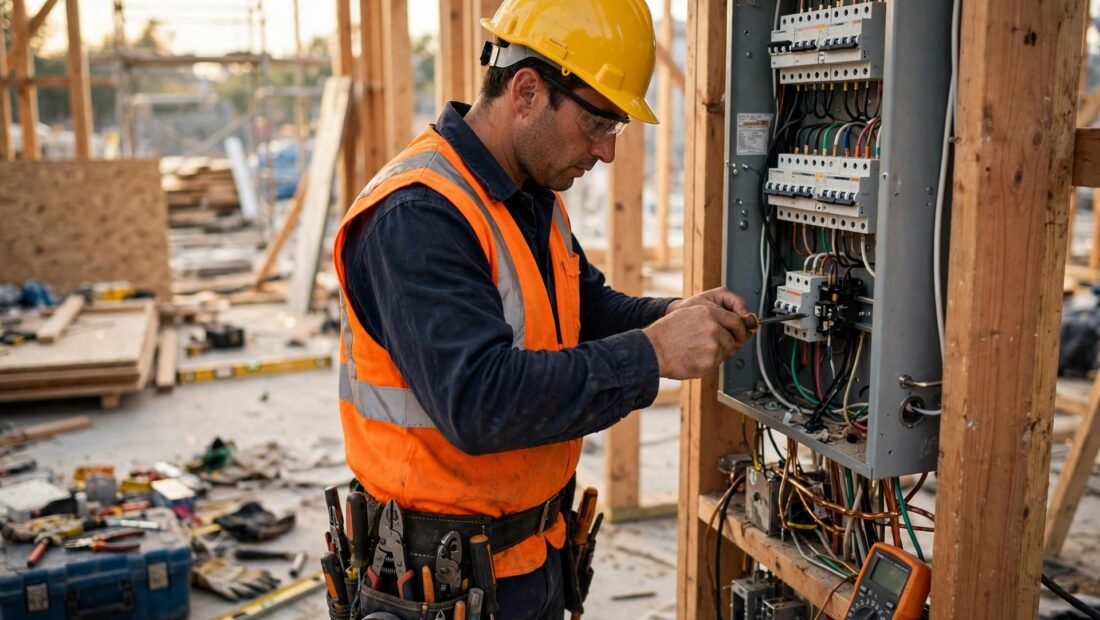
The degree-versus-debt equation looks worse every year: tuition climbing, student loans compounding, and graduates working jobs that never required the diploma. Meanwhile, skilled trades and specialized roles pay $70,000–$100,000+ with no bachelor’s required — some with paid training instead of tuition. Texas, with its energy sector, massive construction pipeline, medical centers, and logistics hubs, is one of the best states in the country for high-paying no-degree work. Here are the roles that actually pay, what they really require, and how to get in.
The Top Tier: $80,000–$120,000+
Commercial pilot (select paths)
Airline pilots need degrees in practice, but charter, cargo, and certain commercial operations don’t strictly require one — flight training ($80,000–$100,000) is the real barrier, not college. Experienced pilots earn $100,000–$200,000+. Texas’s aviation hubs (DFW, Houston) offer strong demand.
Elevator installer/repairer
Median pay ~$100,000 nationally, with Texas metro demand strong. Requires a 4-year paid apprenticeship — you earn while learning, the inverse of college. Physically demanding, occasionally hazardous, extremely well compensated.
Power plant / power distributor operator
Texas’s independent grid means constant demand. Median ~$95,000–$100,000. Requires long-term on-the-job training and licensing; the work is shift-based and high-responsibility.
Oil and gas roles (rotary drill operators, derrick operators)
The Permian Basin pays some of the highest no-degree wages in America — experienced rig workers earn $80,000–$120,000+. Physically brutal, remote locations, cyclical with oil prices — but the money is real. Bureau of Labor Statistics data confirms extraction occupations among the top-paying no-degree categories.
The Strong Middle: $60,000–$85,000
- Electrician (licensed): apprenticeship → journeyman → master. Texas construction boom = relentless demand. Licensed electricians earn $60,000–$85,000; master electricians and business owners earn far more.
- Plumber/pipefitter: same apprenticeship model, same demand story. $55,000–$80,000 employed; six figures self-employed.
- HVAC technician: Texas heat is a jobs program — air conditioning isn’t optional here. $50,000–$75,000, with commercial/industrial specialists earning more.
- Radiation therapist / nuclear medicine technologist: requires an associate degree or certificate (not a bachelor’s) — $80,000–$90,000 in Texas medical centers. The highest-paying “some college” healthcare roles.
- Dental hygienist: associate degree required, $75,000–$90,000 in Texas metros. Competitive programs, but the ROI is excellent.
- Commercial truck driver (specialized): standard CDL work pays $50,000–$65,000; hazmat, oversized, and oilfield hauling pays $75,000–$100,000+. Texas’s freight corridors keep demand high.
- Police officer / firefighter: major Texas departments pay $65,000–$90,000+ with overtime, plus pensions — total compensation often exceeds the salary line.
- Web developer / IT support (skills-based): the tech exception — portfolios and certifications increasingly outweigh degrees for many employers. $60,000–$90,000 for skilled practitioners. (AI is reshaping entry-level tech, though — see below.)
The Paths In (No Degree Required)
- Apprenticeships: the gold standard — paid training in electrical, plumbing, elevator, and ironwork trades. CareerOneStop (U.S. Department of Labor) lists registered apprenticeship programs by Texas region.
- Certificates and licenses: CDL, HVAC certification, real estate license, insurance license — weeks to months of training, not years. Texas real estate agents at productive brokerages earn $70,000+ with zero degree requirement (but it’s commission — the income is earned, not granted).
- Associate degrees (community college): two years at Texas community colleges ($3,000–$5,000/year) unlocks dental hygiene, radiation therapy, and nursing (ADN) — among the highest-ROI credentials in existence.
- Sales: B2B sales, medical device sales, and industrial sales pay $80,000–$150,000+ on commission with no degree filter — performance is the credential. The most meritocratic high-income path available.
- Entrepreneurship: trades businesses (electrical, plumbing, HVAC companies) are the classic no-degree wealth builders — the technician who becomes the owner captures the real money.
How to Choose Between These Paths
The list is long; the choice should be personal. Filter by four factors:
- Your body: trades and oilfield work demand physical durability — knees, back, heat tolerance. Be honest about what your body can do for 20+ years, not just 2. Desk-based paths (IT, sales, real estate) trade physical demand for different pressures.
- Your risk tolerance: commission sales and entrepreneurship offer the highest ceilings and the lowest floors — months with little income are part of the deal. Apprenticeships and public-sector roles (police, fire) offer steady floors with slower ceilings.
- Your timeline: need money now? CDL training (4–8 weeks) and trade helper positions pay immediately. Can invest 2 years? Associate-degree healthcare roles pay more for decades. Match the path’s ramp to your runway.
- Your temperament: sales rewards extroversion and rejection-tolerance; trades reward craftsmanship and independence; healthcare rewards patience and precision. The highest-paying path you’ll quit in a year pays nothing — fit predicts persistence, and persistence predicts income.
Then validate before committing: ride along with a tradesperson for a day, interview three people doing the job (ask what they’d do differently), and check local Texas wages specifically — national medians hide wide regional variation. A week of validation beats a year of wrong-path tuition, even when the tuition is just your time. The BLS Occupational Outlook Handbook (free, at the Bureau of Labor Statistics site) gives growth projections, typical entry paths, and pay ranges for every occupation listed here — it’s the single best reality-check tool before you commit.
Honest Caveats
- Physical toll: the highest-paying trades are physically demanding — knees, backs, and shoulders pay the long-term price. Factor career length into the math.
- Cyclicality: oilfield money tracks oil prices; construction tracks the economy. Diversify skills within your trade.
- AI exposure: some no-degree roles face automation pressure — our guide to AI-safe jobs maps which roles are resilient. Physical trades (electrical, plumbing, HVAC) are among the safest — robots aren’t wiring houses anytime soon.
- “No degree” ≠ “no training”: every high-paying role on this list requires serious skill acquisition — apprenticeships, licenses, certifications. The advantage isn’t skipping effort; it’s skipping debt and getting paid during training.
- Geography matters: these numbers are Texas-strong — energy, construction, and logistics concentrate here. Rural vs. metro pay varies significantly.
For navigating the actual job search once you’ve picked a path — applications, positioning, AI tools used wisely — AI-assisted job hunting covers the modern search toolkit.
Conclusion
The highest-paying no-degree jobs in Texas cluster in skilled trades (electrician, plumber, elevator installer — $60,000–$100,000+ via paid apprenticeships), energy (oilfield roles — $80,000–$120,000+), healthcare certificates (dental hygiene, radiation therapy — $75,000–$90,000 via associate degrees), and performance-based paths (sales, trades business ownership — uncapped). The common thread isn’t lack of education — it’s targeted, paid, practical training instead of general debt-financed degrees. Pick the path that fits your body, temperament, and risk tolerance; the money follows the skill.
Frequently Asked Questions
What are the highest-paying jobs that don’t require a degree in Texas?
Elevator installers (~$100,000), oilfield/rotary drill operators ($80,000–$120,000+), power plant operators (~$95,000), licensed electricians and plumbers ($60,000–$85,000+, more self-employed), dental hygienists ($75,000–$90,000 with an associate degree), and commission sales ($80,000–$150,000+).
Can you make six figures without a college degree?
Yes — elevator installation, oilfield work, specialized sales, trades business ownership, and experienced licensed trades all reach six figures. The path is apprenticeship, certification, or commission performance — not credentials-free, but debt-free.
What trades pay the most in Texas?
Elevator installer/repairer tops the list (~$100,000 median), followed by power plant operators, electricians, and plumbers — all $60,000–$100,000+ ranges. Texas’s construction boom and energy sector keep demand and wages high.
Are trade jobs safe from AI automation?
Physical trades are among the most automation-resistant occupations — electrical, plumbing, and HVAC work requires dexterity, judgment, and on-site problem-solving that robotics can’t replicate at scale. They’re consistently ranked among the safest jobs from AI displacement.
How do I start an apprenticeship in Texas?
Contact trade unions (IBEW for electrical, UA for plumbing/pipefitting), check CareerOneStop’s apprenticeship finder for registered Texas programs, and approach local contractors directly — many hire apprentice helpers who enter formal programs. You earn wages from day one.